Comprehending Peptide Pureness: What 99%+ Really Means
Recognizing Peptide Purity Testing
HPLC procedures chromatographic pureness by dividing the target peptide from associated pollutants and determining main-peak area percent. Mass spectrometry confirms molecular identification by checking whether the determined mass matches the expected Peptide Stability peptide mass. For research-grade peptide qualification, HPLC and LC-MS/ESI-MS solution various questions and ought to read with each other. BOC Sciences also offers detailed in vitro (cell systems) and in vivo (pet platforms) testing solutions to assist customers totally understand peptide formula efficiency in different environments. Artificial insemination examinations examine peptide cytotoxicity, cell uptake, anti-inflammatory activity, and much more, giving basic data support for peptide applications in medical visual appeals and biomedical areas.For scientists, obtaining verified peptides isn't just a formality-- it's the foundation of trusted experiments and study reproducibility. Poor-quality peptides (those with undiscovered impurities, inaccurate sequences, or degraded elements) can cause misleading information and irreproducible results. Actually, proteins and peptides are among one of the most widely made use of lab reagents, yet researches have actually revealed that their top quality is often inadequate, leading to poor information reproducibility. Starting with proper laboratory recognition is consequently an essential part of a scientist's quality assurance workflow.
Residuals Testing
- We employ GC-MS, ICP-MS, and various other methods to find pollutants, ensuring item safety and security and governing conformity.
- Chiral techniques can address enantiomeric purity where stereochemistry is a worry.
- For a lot of research objectives, high purity suggests you can be certain that the substantial bulk of the particles in your vial are the proper peptide, which aids make certain experimental uniformity and reproducibility.
- Peptide pureness is normally shared as a percent, such as 95% or 98%.
- Research laboratory validation for peptides implies utilizing clinical examinations to verify a peptide's identity, purity, and composition.
- This is why respectable providers provide both HPLC and MS information on their Certificates of Evaluation.
Other spectroscopic methods, such as Infrared (IR) or UV-Vis analysis, are sometimes made use of for fast top quality checks or architectural confirmation. This is why credible suppliers supply both HPLC and MS information on their Certifications of Evaluation. Peptides in microspheres and nanoparticles might with matrices, making it challenging to divide complimentary and encapsulated types. We make use of dialysis, ultrafiltration incorporated with HPLC/UV methods to scientifically examine encapsulation performance and medicine loading. These evaluations are useful when customers need more than a mass range and chromatogram to judge whether a great deal is really fit for quantitative work.
Types Of Contaminations Hplc Spots
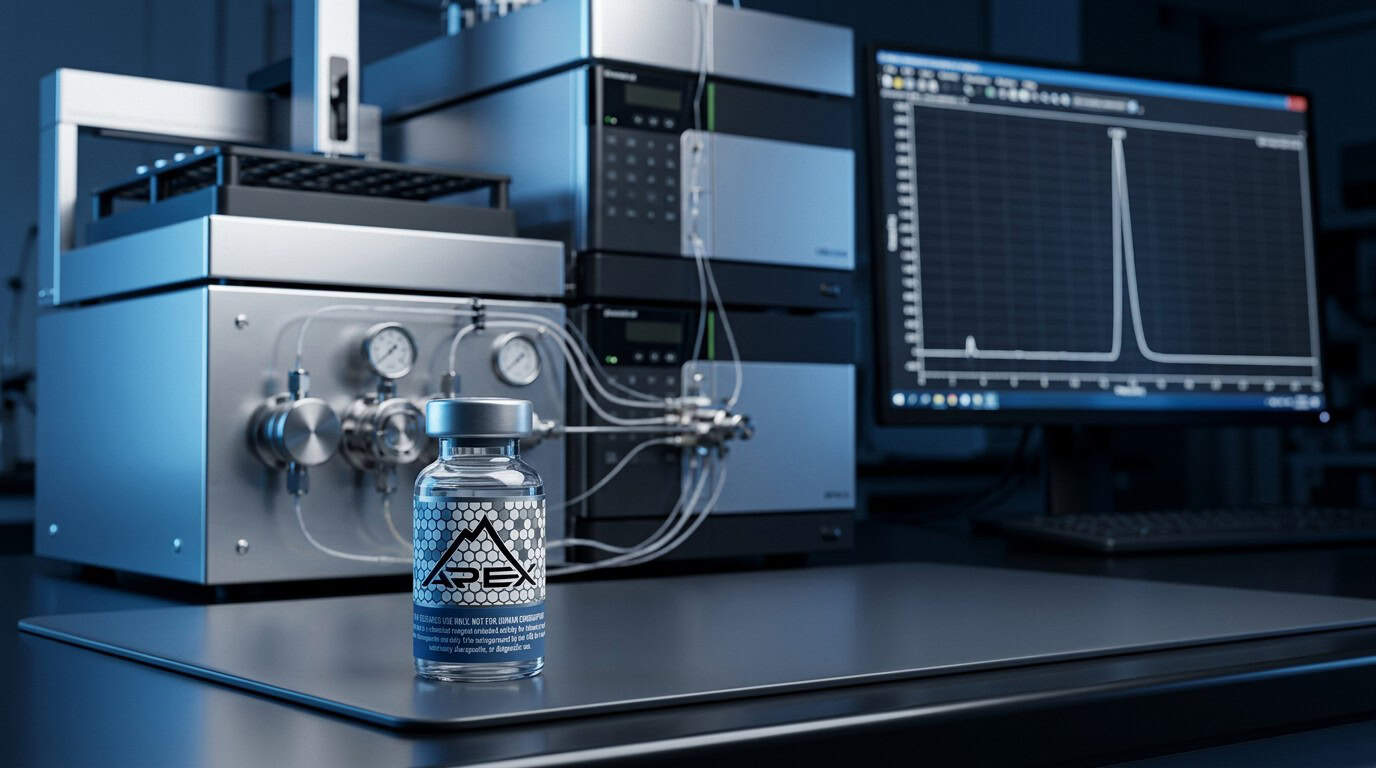
We sustain amino acid structure evaluation and net peptide content analysis for groups that need more trusted focus setting and batch interpretation. HPLC-tested implies the sample was gone through high-performance liquid chromatography to separate the target peptide from contaminations. The purity portion is generally calculated from the main optimal area split by the total integrated optimal area.
Ms/ms Fragmentation: Sequence Confirmation
Not every application needs 99% purity, and purification is a substantial part of peptide production expense. Trace amounts of solvents utilized throughout synthesis and filtration-- acetonitrile, dimethylformamide (DMF), dichloromethane-- can remain in the end product. These are generally present at extremely reduced degrees in properly manufactured peptides and are controlled by ICH Q3C guidelines for appropriate restrictions. If the target peptide's optimal make up 99.1% of the total optimal area, the peptide is reported as 99.1% pure by HPLC. Several credible research study peptide suppliers utilize third-party labs; some conduct internal screening with publication of lab qualifications.
" Mass spectrometry solutions "is the discovered compound regular with the intended peptide identity? " Together they give more powerful batch-level evidence than either technique alone. In the typical peptide COA context, top pureness generally refers to the percent of overall chromatogram area represented by the primary peptide optimal. These are valuable in the best setting, however they should be interpreted as method-specific evidence as opposed to a global substitute for HPLC and MS. Yet peptide pureness is perhaps the single most important top quality statistics for any research peptide. It directly impacts the dependability and reproducibility of experimental results. A peptide noted at 75% purity and one at 99% pureness aren't simply various grades-- they can generate meaningfully various outcomes in the very same assay.